- 6001 Elvas Ave, Sacramento
- (916) 451-5176


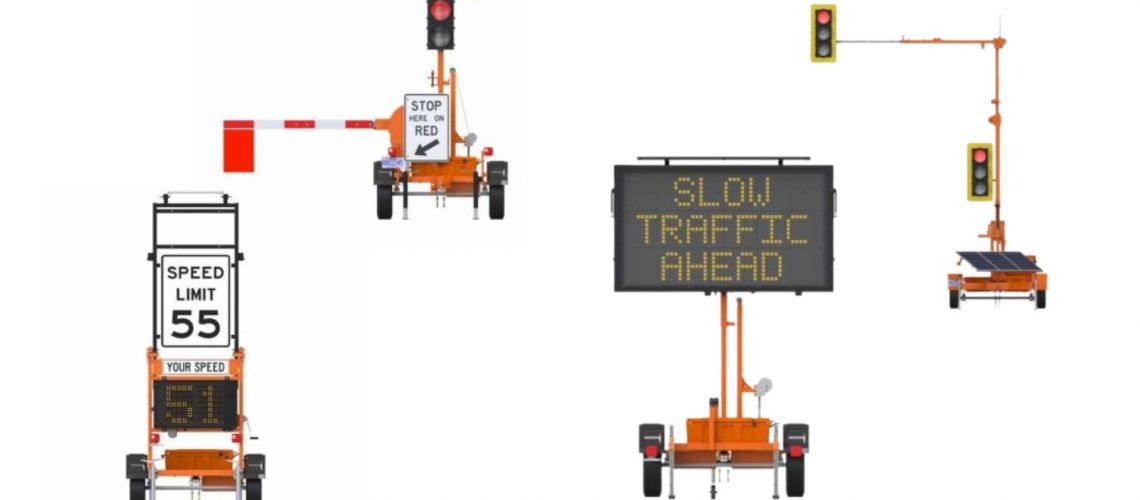
Many Sacramento drivers have passed through work zones where a signal controls traffic instead of a flagger. Those are trailer mounted traffic signals at work. These portable traffic signals mount on a wheeled trailer. Crews tow them to any job site, set them up fast, and reposition them as traffic conditions change.
Unlike permanent signals at busy intersections, these units are built for temporary traffic control. They run on solar panels, which means continuous operation without needing an electrical hookup on site. Many modern units also feature remote monitoring and advanced technology for real-time signal adjustments.
Trailer mounted traffic signals do not get nearly as much attention as cones, barricades, or arrow boards. They deserve more. These units solve traffic problems that flaggers and static devices simply cannot handle on their own. If you manage a work zone or oversee road construction in the Sacramento area, these systems are worth understanding. They also serve short-term events where traffic spikes unexpectedly.
Temporary traffic signals operate on a straightforward principle. They replace or supplement permanent signals wherever traffic flow needs temporary management. Each unit includes LED signal heads, a programmable control system, and a solar powered battery. That battery sustains continuous operation overnight and through overcast weather.
Setup takes a few hours or less. Our crews position the trailer, extend the stabilizers, raise the signal heads, and program the timing sequence. Wireless communication links two or more units together. Drivers on both ends of a work zone see coordinated signals at all times. That integration is what makes these systems reliable and safe for workers, pedestrians, and drivers alike.
Knowing when to deploy temporary traffic signals helps project managers protect everyone on the road. These are the situations where portable traffic signals deliver the most value.
Road construction often forces vehicles to share a single lane. Human flaggers can manage this, but they tire, take breaks, and face serious safety risks. Portable traffic signals operate without breaks and hold consistent timing across a full shift. That consistency reduces risk and improves work zone safety for everyone on the job site.
When a permanent signal goes down for repairs or a power failure, busy intersections become dangerous fast. A trailer mounted signal deploys immediately and restores order while crews fix the underlying problem. We can have a unit on-site and operational within a few hours to reduce congestion and protect drivers.
Not every temporary traffic need involves long work zones or road construction. Festivals, sporting events, and community gatherings can flood intersections that normally see light vehicle volume. Portable traffic signals handle short term traffic control efficiently. They cost far less than a full flagging crew for events lasting only a few hours.
On divided highways, construction zones can stretch for miles. Coordinating multiple trailer mounted signals across a long zone lets crews control traffic at several key points simultaneously. Remote monitoring gives supervisors the ability to track signal timing and make adjustments without physically driving the entire zone.
Human flaggers are essential in many temporary traffic control situations. However, trailer mounted traffic signals offer meaningful advantages on the right projects.
Staffing a single one-lane closure can require two or more flaggers working long shifts. Labor costs add up quickly on multi-week projects. Portable traffic signals reduce those costs and operate around the clock using solar panels. There are no overtime concerns and no breaks to schedule.
Moving a unit and getting it back online takes a fraction of the time needed to reorganize a flagging team. That speed protects your project schedule and reduces costly delays.
Safety is another clear advantage. Signals keep workers out of active lanes of traffic. Flaggers stand in the path of vehicles on every single shift. Trailer mounted signals let your team focus on the construction work while the system manages vehicles automatically.
Today’s trailer mounted traffic signals go well beyond a simple red-green cycle. Advanced technology built into these systems improves efficiency and road safety across the board.
Remote monitoring lets operators check signal status, battery levels, and timing cycles in real time from a phone or tablet. If conditions change, adjustments happen remotely. There is no need to send a crew into the zone just to update a timing sequence.
Wireless integration keeps multiple units synchronized. Drivers approaching from opposite ends of a work zone see coordinated signals. One end shows green only when the other shows red, ensuring safe traffic flow through the entire zone.
Solar panels paired with battery backup ensure continuous operation even during poor weather or grid outages. The system keeps running so drivers and pedestrians can pass through the zone safely regardless of conditions.
Temporary traffic signals are almost always the more cost effective choice for projects lasting more than a day or two. Think about the ongoing labor cost of multiple flaggers across a two-week road construction project. Then compare that against the rental cost of two portable signal units. The math favors the signals.
You save money on labor, reduce congestion with consistent signal timing, and improve work zone safety without adding headcount. For very short deployments lasting only a few hours, flaggers may still be the right call. For anything longer, temporary traffic signals pay for themselves quickly. The ability to operate around the clock without crew rotation is one of the biggest cost advantages these units offer.
We carry trailer mounted and portable traffic control equipment for work zones across Sacramento and Northern California. We have units for construction zones, signal outages, and short-term traffic events. Whatever your project, we have the equipment and experience to handle it.
Browse our complete selection of electronic traffic signs and trailer-mounted equipment at capitolbarricade.com/product-category/electronic-traffic-signs/.
Ready to add trailer mounted traffic signals to your next project? Our team helps you select the right equipment, plan your deployment, and ensure smooth traffic flow from day one.
Call us at 916-451-5176 to talk through your project, or submit a contact form on our website and we will get back to you quickly. You can also stop by our Sacramento location at 6001 Elvas Ave, Sacramento, CA 95819. We are open Monday through Friday and happy to walk you through your