
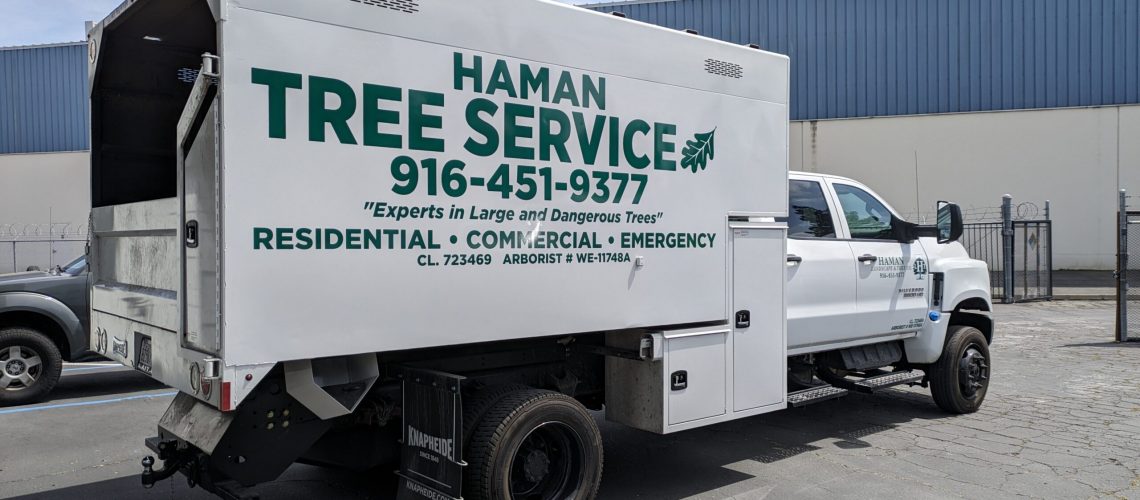
Work trucks take a beating. Gravel lots, job site dust, and daily washouts wear down any finish fast. So when you’re branding your vehicles, it comes down to one thing: what your trucks need hold up over time!
A full or partial wrap covers more surface area and protects your paint. It also holds up best under heavy job site use. A decal costs less, installs faster, and works well for smaller budgets or simple logos. Neither option is wrong. The right one depends on your fleet size, your budget, and how hard your trucks work.
What Is a Vehicle Wrap?

A vehicle wrap is a large vinyl graphic applied over part or all of a truck’s exterior. Full wraps cover the entire vehicle, while partial wraps cover a portion, often the hood, doors, or rear panel.
Wraps use printed vinyl with a protective laminate layer. That layer shields the paint underneath from UV rays, scratches, and minor chips. Most professional wraps last 5 to 7 years with routine care.
Installation takes longer than a decal job. A full wrap can take a full day or two, depending on the vehicle and design complexity.
What Is a Decal?
A decal is a smaller, cut-vinyl graphic. Crews apply it directly to a door, tailgate, or window. Decals work well for logos, phone numbers, DOT information, or simple text.
Decals install fast, often in an hour or two. They cost less upfront and require less material. They don’t protect the surrounding paint the way a wrap does, since they only cover a small area.
Cost Comparison for Work Trucks
Budget is usually the first question fleet managers ask. Here’s how the two options generally compare:
- Full wraps run higher, since they use more material and take longer to install.
- Partial wraps cost less than full wraps and use less vinyl.
- Decals cost the least and work well for basic branding needs.
Full wraps do more than advertise. They also protect the paint underneath, which can help preserve a truck’s resale or trade-in value over time. That protection often offsets some of the higher upfront cost.
Durability on the Job Site
Work trucks face more wear than a typical company car. Gravel roads, brush, and frequent pressure washing all take a toll on any exterior graphic.
A quality wrap with laminate protection resists fading, chipping, and scratching better than a basic decal. It also holds up better against the dirt and grime that build up on a jobsite vehicle.
Decals can still perform well on trucks with lighter duty cycles. They also hold up fine on doors and panels that see less direct contact with debris. For trucks that spend most of their time on rough terrain, a wrap is the more durable choice.
Either option needs basic upkeep. Hand washing, shade parking, and avoiding high-pressure water near the edges all extend the life of a wrap or decal.
Branding and Visibility for Contractors
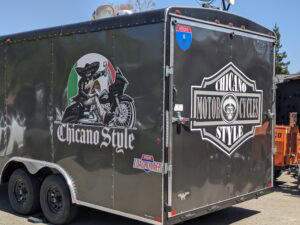
Your truck is a moving billboard every time it’s on the road or parked at a job site. That matters for contractors and event organizers competing for local visibility.
Vehicle wraps generate roughly 2.5 times the attention of static outdoor advertising. They also cost as little as $0.77 per 1,000 impressions. That makes a wrapped fleet one of the most cost-effective forms of local advertising available.
Decals still get your name and number in front of potential customers. They just cover less visual space and carry a lower impact per vehicle. For fleets that value maximum visibility, a full or partial wrap makes the stronger impression.
Which Option Fits Your Fleet?
Ask three questions before you decide:
How many trucks are you branding? Larger fleets often mix wraps and decals to balance cost and visibility across vehicles.
How rough is the daily use? Trucks that spend most of their time off-road or in construction zones benefit more from a wrap’s added protection.
What’s the goal: maximum visibility or basic identification? A wrap makes a bigger visual statement. A decal gets the job done for less.
There’s no single right answer for every fleet. A closer look at full wraps, partial wraps, and decals can help you weigh the tradeoffs in more detail.
Frequently Asked Questions
Do decals fall off easier than wraps? A properly installed decal holds up well for years. It just covers less area, so it protects less of the surrounding paint than a wrap does.
Can I mix wraps and decals on the same fleet? Yes. Many contractors wrap their newer or highest-visibility trucks and use decals on support vehicles or trailers.
Will a wrap damage my truck’s paint? No. A professionally installed and removed wrap protects the paint underneath and won’t damage the factory finish.
How long does installation take? A full wrap typically takes one to two days. A decal installation usually takes an hour or two.
Which option is better for a small business just getting started? Decals are a solid starting point for a tight budget. You can always add partial or full wraps to your fleet later.
Get Your Work Trucks Job-Site Ready
Capitol Barricade has outfitted Northern California work trucks and fleets for 50 years. Our 3M-trained installers handle everything from full wraps to simple door decals, built to hold up on the job.
Call 916-451-5176 to talk through the best option for your fleet, or request a quote today.