- 6001 Elvas Ave, Sacramento
- (916) 451-5176


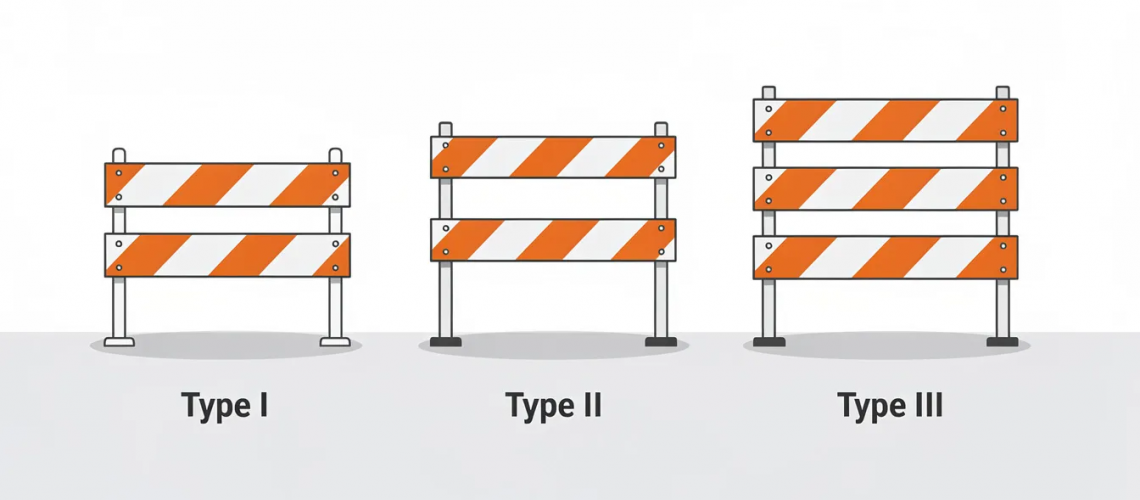
If you work in construction, road maintenance, or event coordination in Sacramento, you have seen traffic barricades on nearly every job site. But not all barricades are the same. Choosing the wrong type can put workers, pedestrians, and motorists at risk. It can also put your project out of MUTCD compliance.
We have been helping Sacramento-area contractors and project managers find the right traffic control devices for over 50 years. In this post, we break down the key differences between Type I, Type II, and Type III barricades, and explain exactly when to use each one.
Traffic barricades are a specific category of channelizing devices used to physically block or redirect road users. Unlike cones or delineators, barricades are larger, more visible, and built to close off lanes or restrict access completely.
All three types use alternating orange and white retroreflective material on their panels. This retroreflective sheeting reflects light back toward drivers at night, keeping the barricade visible even in low-light conditions. Each type must meet MUTCD standards to be used on public roadways in California.
The main differences come down to size, the number of reflective panels, and the types of roadway conditions they are designed for.
A Type I barricade features one reflective panel on top of an A-frame steel or plastic frame. It is the smallest and lightest of the three types. That makes it easy to transport, set up, and reposition quickly.
Type I barricades work best in lower-speed environments where vehicle traffic is limited. Common uses include:
Type 1 barricades are not designed for high-speed roadways or areas with heavy vehicle traffic. If vehicles are traveling above 45 mph near your work zone, a Type I is not the right choice. Use it where the primary concern is pedestrian guidance and low-speed redirection.
Type II barricades add a second reflective panel below the top rail. That extra panel increases overall visibility and gives drivers more warning as they approach. Type II barricades are taller and more visible than Type I, and they are built to handle moderate vehicle traffic.
You will typically see Type II barricades used for:
Type 2 barricades strike a balance between portability and visibility. They are more substantial than Type I but still practical to move around a job site as conditions change. In Sacramento, these are common on surface street projects where traffic keeps moving through a nearby lane.
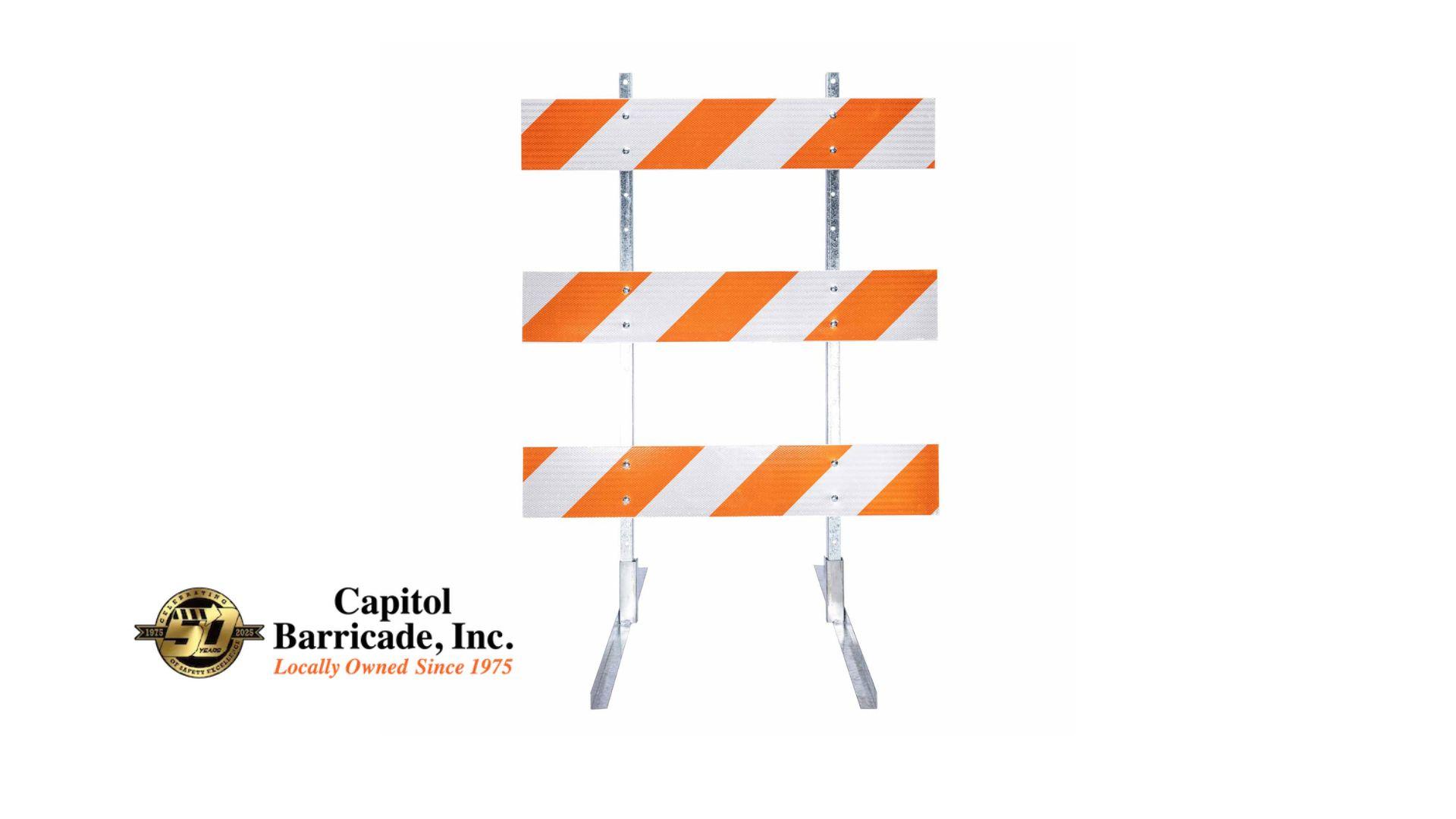
Type III barricades are the largest and most visible of the three types. They feature three full reflective panels stacked vertically on a wide, sturdy frame. Our JBC Type III stands 48 inches wide and 60 inches tall, supported by two 4-foot steel legs.
Type 3 barricades are required on high-speed roadways, expressways, freeways, and anywhere a full road closure is in place. MUTCD standards specify Type III for these conditions because drivers need maximum warning distance. The larger panels and greater height give motorists the visibility they need to react safely at highway speeds.
Use Type III barricades when:
If you are working near freeways or expressways in the Sacramento region, Type III barricades are typically what your traffic control plan will call for.
Regardless of which type you choose, barricade lights are often required for nighttime work or low-visibility conditions. Barricade lights mount on top of the barricade and flash to warn approaching motorists. Battery and solar-powered options are available.
Type I and Type II barricades include a light mounting receptacle so you can add lighting when the job calls for it. Type III barricades used on high-speed roadways almost always require lights as part of a MUTCD-compliant setup.
We stock all three barricade types at our Sacramento location. Whether you need a dozen Type I barricades for a sidewalk closure or a full set of Type III barricades for a road closure project, we can get you what you need.
Rent traffic barricades when your project is short-term or your equipment needs change from job to job. Renting keeps upfront costs low and puts the maintenance burden on us.
Buy traffic barricades when you have ongoing traffic safety needs and want equipment on hand at all times. Owning your gear gives you flexibility and long-term cost savings.
Not sure which type fits your Sacramento project? Our team has helped contractors, municipalities, and event organizers choose the right equipment for decades. We can walk you through your options and make sure your setup meets all MUTCD standards and local permit requirements.
Ready to get the right barricades for your project? Call us at 916-451-5176 or contact Capitol Barricade online to talk through your traffic safety needs. We are here to help.
Capitol Barricade | 6001 Elvas Ave, Sacramento, CA 95819 | 916-451-5176